Piano Teaching 04|How to improve your sight reading ability? (sight-reading)
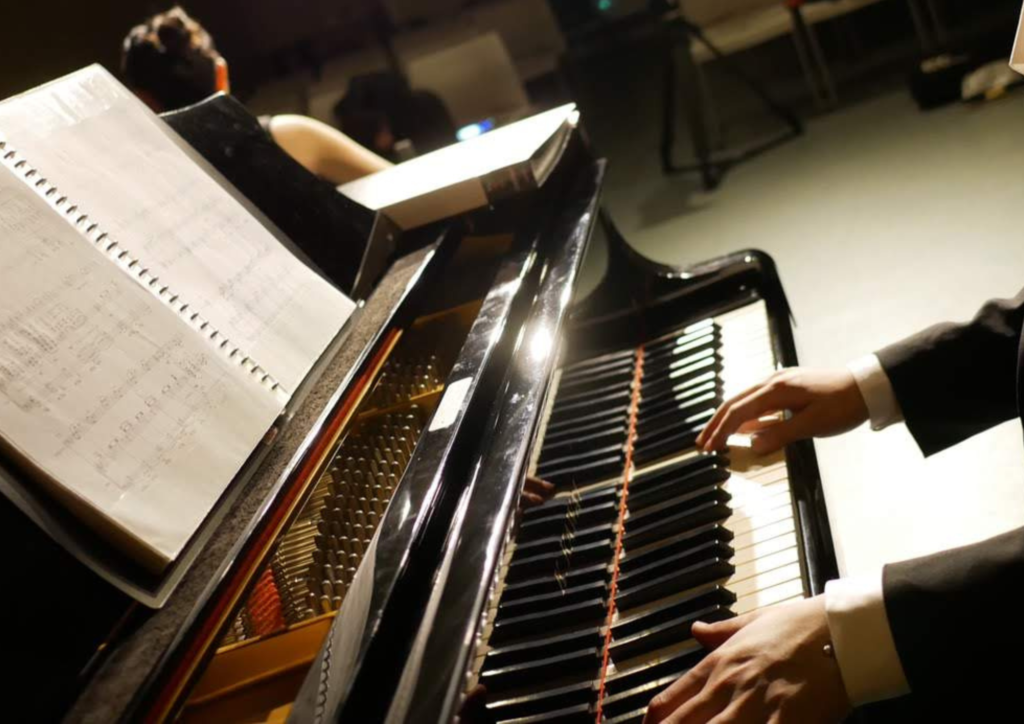
Sight-reading refers to the ability to understand music scores and convert them into music. It is a very important skill for people who learn piano or other musical instruments. Improving your sight-reading skills can help you learn new songs faster, increase your practice efficiency, and enable you to play different styles of music flexibly.
Regarding how to improve your reading ability, here are a few tips to share with you:

- Look more at the score and less at the hands
Many people are used to staring at their hands when playing, worrying about playing wrong notes. This is not conducive to cultivating the habit of sight reading, and will also affect the fluency and accuracy of playing. In addition, some students do not like to read music, so they only use Even if I forget the music score, I just stare at my hands, in the long run, the ability to read music cannot be significantly improved, and the efficiency of piano practice is not ideal.
The correct way is to read the music score more and your hands less, or even not at all, to develop the habit of reading the music score and playing, so that you can read the music score with your eyes, listen to the music with your ears, and find the note you want to play according to the fixed fingering method. Only in this way can your hands and Only by using your eyes and brain together can you improve your reading ability.

- Become familiar with different time signatures and key signatures
Time signature and key signature are very important information in the score, they determine the rhythm and key of the music.
Practice pieces in various time signatures (e.g. 2/4,3/4, 4/4, 6/8 or even 5/4, 7/4...etc.) helps to be prepared for any situation. In addition, the key signature is also a very important part, because you need to know how many sharps or flats there will be in the music you are practicing..
The best way is to become familiar with various time signatures, key signatures, and rhythm combinations through practicing scales, arpeggios, and a large number of repertoires.


- Daily practice.
Visual reading ability cannot be developed overnight, it requires long-term persistence and practice. In addition to the above methods, there are also teaching materials specifically for practicing sight reading., everyone can choose the appropriate series of exercises according to their own level.
(Before starting to play, read the score for 30 seconds, and consider smooth playing as the choice of progression)
Let me share with you the practice steps of sight reading teaching materials:
1. Confirm the time signature and key signature
2. Before playing, confirm the more difficult rhythm or interval changes and sing the notes in your mind.
(When practicing a piece, there will even be changes in the clef and key signature.)
3. On the premise of smooth playing,Keep a steady and slow pace. If you start too fast, you won't be able to maintain the same speed for the more difficult passages. (imagine how fast you can play)
at the same time,Analyze the shape of the phrase, reading one sentence at a time, and find the highest and lowest notes in the phrase.
4. Your eyes are faster than your hands, and you should read the score at least one bar ahead of the playing speed to ensure the smoothness of the music.
The ability to read music is closely related to the familiarity with time signatures, key signatures, intervals, and chords. Need practiceA large number of tracks can lead to significant improvement.In addition to the above methods, people who have a strong concept of chords can also try to increase the efficiency of reading music through chord analysis.
Many students find it difficult to read music scores, so they always play from memory when practicing. After practicing a few times, they start to memorize the music. Even if you practice piano at home, because you haven’t mastered it yet, without reading the music, you won’t know if you made a mistake, which will lead to inefficient practice in the long run.